

Sunday, September 15/28, 2025
Sunday after the Exaltation
GM Nicetas the Goth
2 Corinthians 6:1-10
Mark 8:34-9:1
In the name of the Father, and of the Son, and of the Holy Spirit. Amen. Christ is in our midst. I would like to begin this morning with one of the weekday exapastoleiria for the Cross:
The Cross is the guardian of all the world, the Cross is the beauty of the Church, the Cross is the might of kings, the Cross is the support of the faithful, the Cross is the glory of the angels, and a scourge to demons.
We have, in this feast, exalted, beautified, and adorned the cross, as we rightly should. But let us also remember its origin as an offensive, horrific, and extremely grotesque form of suffering and death. How did such an instrument of death become the supreme source of life? It is because the sinless Lord himself hung upon it voluntarily for the salvation of the world out of His extreme love for us.
Let us recall for a bit what our convenient, comfortable culture teaches us about the good life, which is far from the path of the cross. Living what many call the American dream usually involves an effort to maximize comfort and minimize pain. We Americans seek after pleasure as its own end, and in the end, it betrays us first as not fully satisfying, and then as even causing pain. Then we seek to minimize pain with even more pleasure seeking. This activity serves an endless downward cycle of pleasure and pain without ever addressing the root cause of our distress: being estranged from God. The cause of this distress is the absence of the true end of our life which should not be pleasure.
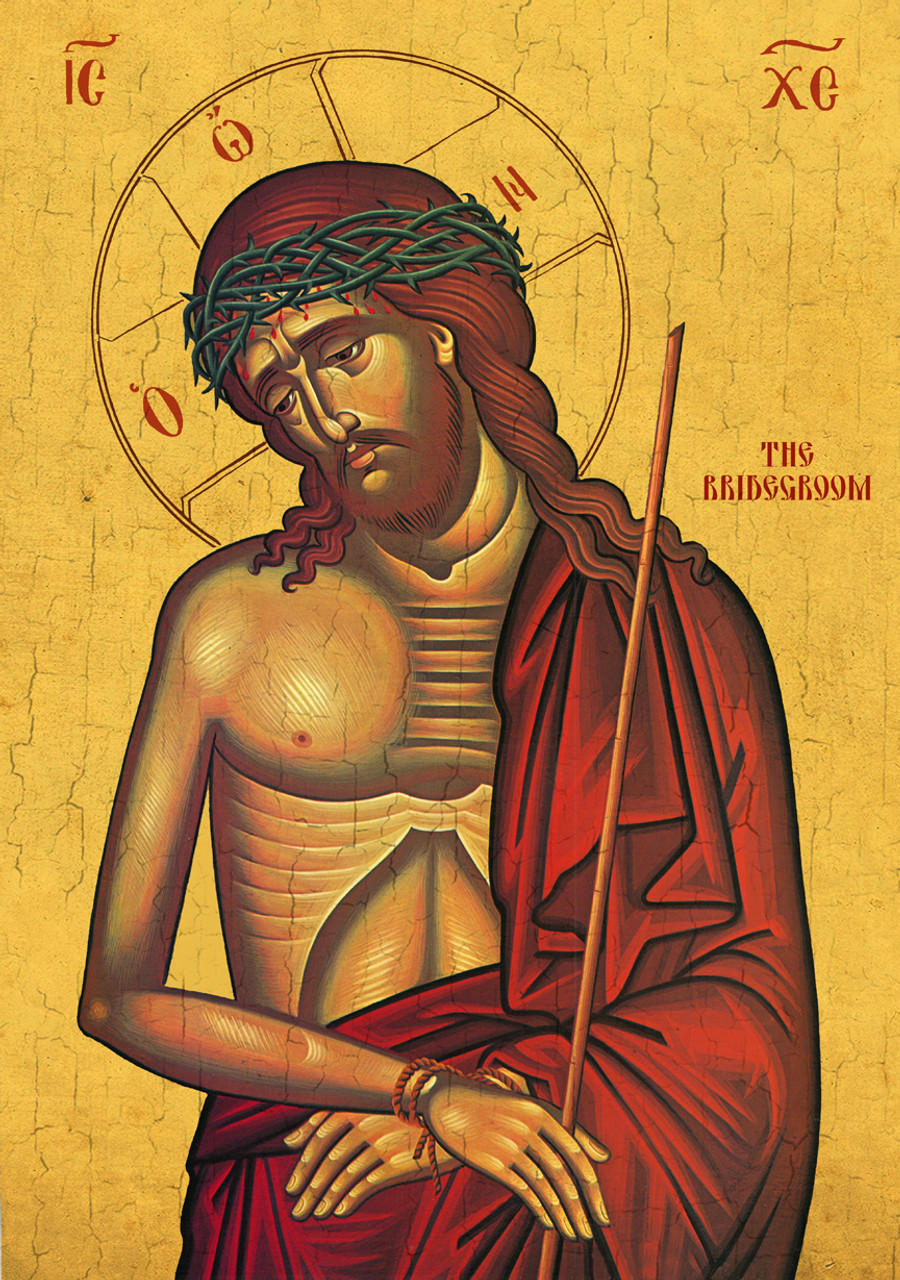
Union with God should be the end of life. And when God himself in the person of Jesus Christ came into the world, he did not live a life of seeking pleasure. Rather than following his bliss, he followed his blister, or as Isaiah the prophet says, ” He was despised and rejected by men, a man of sorrows, acquainted with grief. Like one from whom men hide their faces, He was despised, and we esteemed Him not.” And as St. John testifies in his Gospel, “He came to his own and his own received him not.” Rather than pleasure, our Lord chose the path of humility, even humbling himself to an unjust, cruel death by the worst means of death: the cross.
This was the turning point in human history. Our Lord’s crucifixion marked the end of our downward cycle of pleasure, pain, and captivity to sin. For our Lord Jesus Christ took this instrument of death and transformed it into a precious and life-giving path. And in today’s Gospel, he encourages us to “Take up our cross and follow after him.”
What does this look like for us? If you do not know how to bear your cross, look around you. You are among a community of cross bearers. Even the Lord himself asked for help in bearing his own cross and received it from one Simon of Cyrene. Who is your Simon of Cyrene waiting to be asked? Do not bear your burden alone for our Lord commands his disciples to “bear one another’s burdens and so fulfill the law of Christ.”
Remember too that even when the Lord received help from Simon, he took back his cross for it was his to carry. We too must look for the divine providence in the load that we bear. It is too easy to think that God made some kind of mistake in placing us in a particular situation. We must instead learn to pray with the Akathist, “Glory to Thee for every condition Thy providence has put me in.”
St. Paul testifies this morning in his epistle the same kind of paradoxical path that those who take up their cross follow:
“… as deceivers, and yet true; as unknown, and yet well known; as dying, and behold we live; as chastened, and yet not killed; as sorrowful, yet always rejoicing; as poor, yet making many rich; as having nothing, and yet possessing all things.”
What conditions this morning seem to bring you both sorrow and rejoicing? By entering in to the life of the Church, we too can follow this way of the cross. It is full of apparent contradictions: dying yet we live; being poor, yet making many rich; as deceivers, yet true. If you come to church discouraged by your outward appearance, by your life circumstances, by things just not making sense, please know that the Lord in himself has taken all the broken pieces of our humanity and made them beautiful, completely transfigured in his death, burial and resurrection. Take hope then that when darkness meets the light of his cross, it cannot overcome the light.
 Like Mendicant Monks...