Oldest Daughter’s First Post

Here is my oldest daughter’s first attempt at blogging. She wrote this herself first on a piece on paper, then typed it both in English and Russian. The Russian still needs some work, so check back in a few days, and it will all be correct, I am sure…

July 17/30, 2012, G. M. Margaret

In the morning we went to 3 different playgrounds.  In the afternoon we rode the tramvai  to  a monastery.

17/30  июль, 2012    Д М Маргрет

утром мы пошли на 3 других пащадак

“Perhaps We Could Drink Some Tea…”

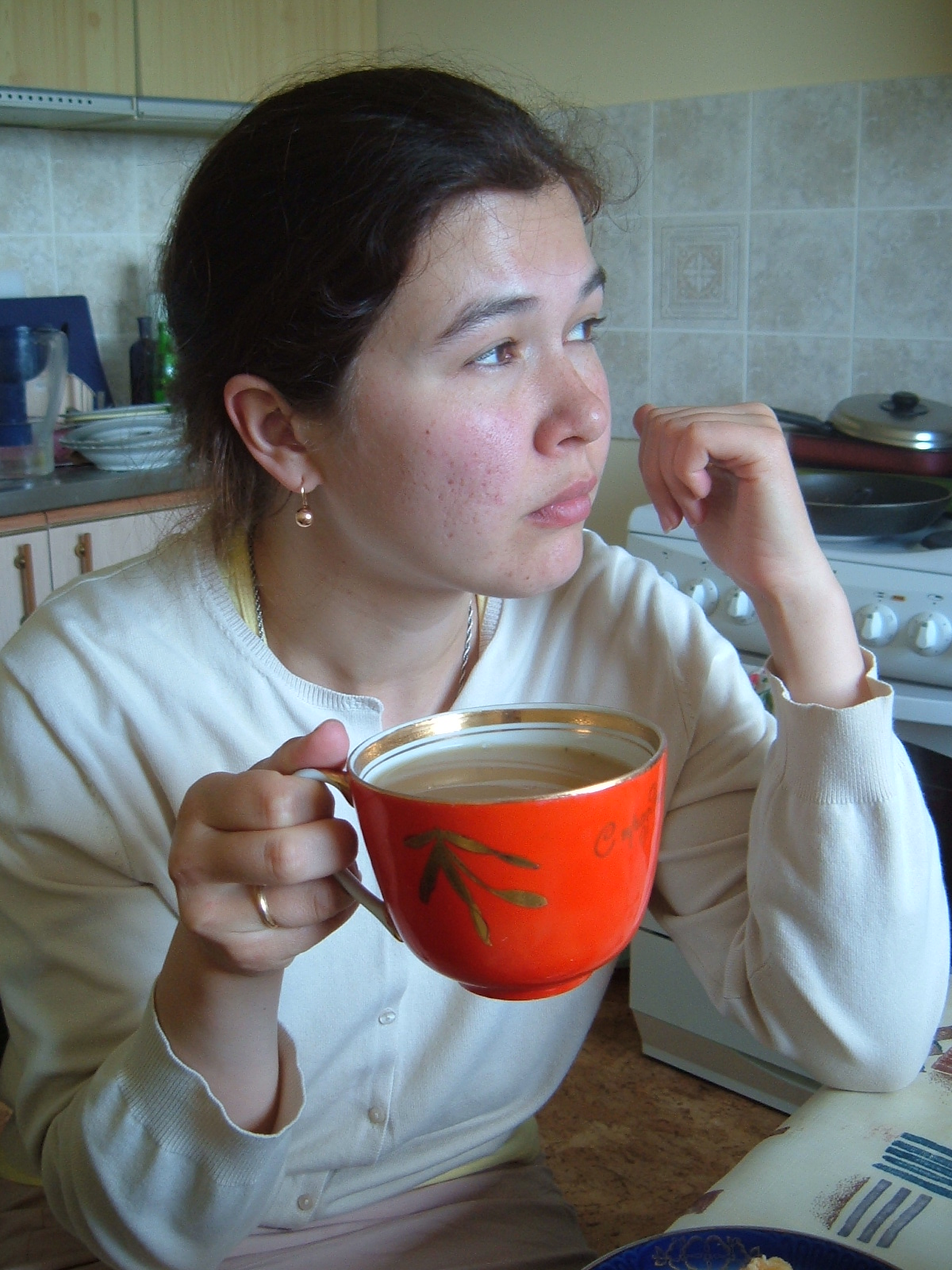
I have given up finding the perfect cup of coffee in Russia. Such a thing just does not exist in a culture so based on drinking tea. A wikipedia article I researched reports that 82% of Russians drink tea on a daily basis.

Sure they have coffee available for the token foreigner who shows up and prefers it, but it is always an after-thought, a concession, appealing only in its exotic qualities. Tea is the native drink for Russians. Has been for over 300 years, and it is always available in large doses, the larger the better. Continue reading

Celebrating an Anniversary with Singing

We celebrate the anniversary of our host’s marriage in the Orthodox Church. By all rights, not the “real” anniversary date since people in the Soviet Union were almost all married civilly, outside the church and then after the fall of communism came back to have their union blessed by a proper church sacrament. You wouldn’t know that this was just their second wedding anniversary from the celebration and the songs that accompanied it. The old-timers really hammed it up in a big way. Continue reading

Extreme for Us, Normal for Russians

As Bilbo the Hobbit is known to say, “Dangerous thing leaving your front door. You never know what adventure might await you.” I have always loved this combination of the momentous with the ordinary, of a risky adventure with something as commonplace as closing the front door.

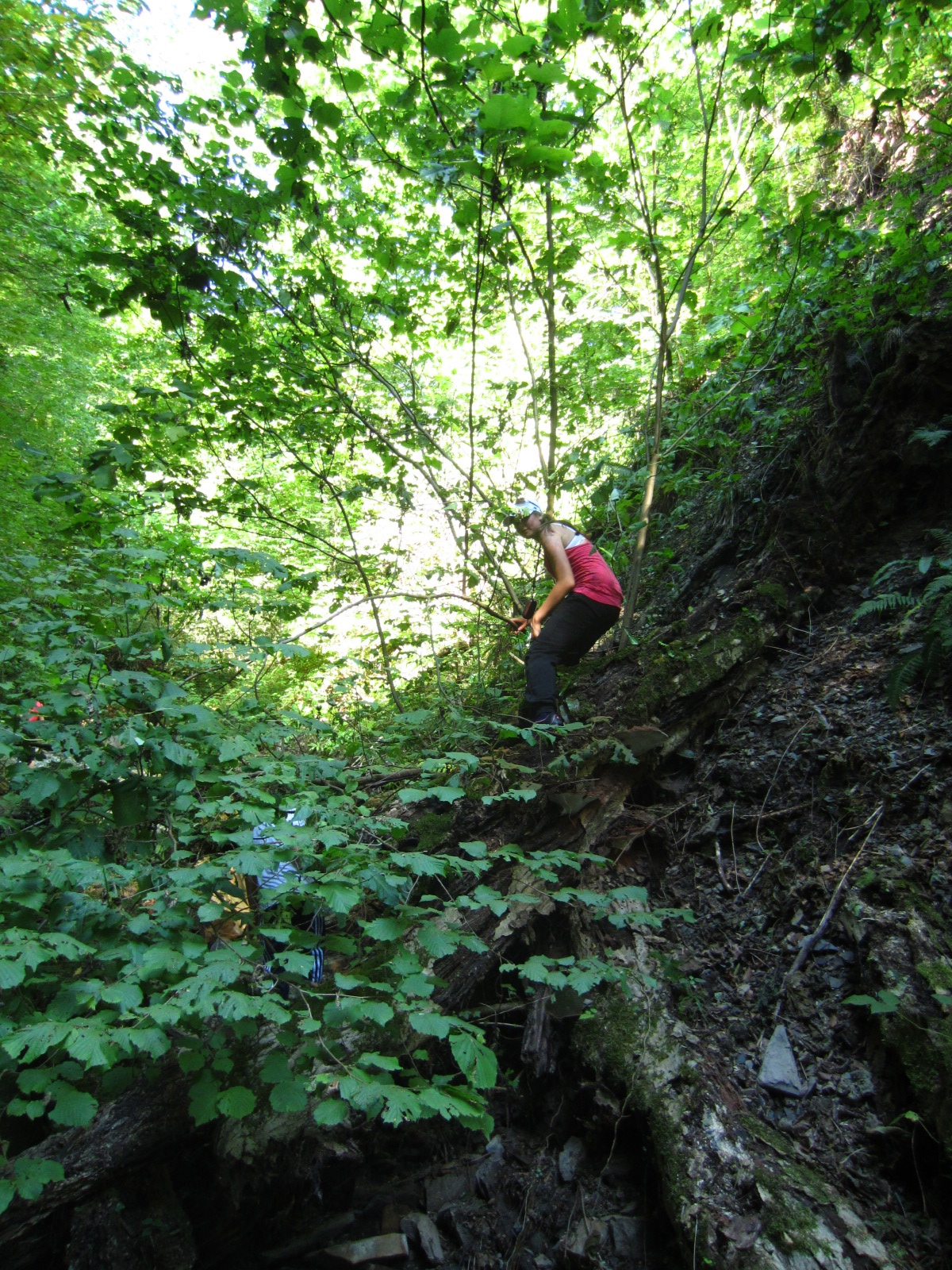
The Russian definition of adventure is very different from the American one. When our cousin invited me for a walk through the forest to see a waterfall, I knew my American visions of well-traveled paths, safe overlooks, and points of easy return were all illusions. It was more like a bush-wack than a stroll. What made it more difficult is the very steep landscape in this mountainous, seaside region. Continue reading

Family Reunions in the Kingdom of Heaven

In America, we like to start and end our events “on time”, and whenever things don’t strictly correspond to the clock, guests and hosts alike can get pretty disturbed. In Russia and especially here in Sochi, we follow a different kind of clock and feast in a very different  way.

Today is Sunday, the day of the Lord’s resurrection, which is by default always a feast day. After going to morning Liturgy, we return to our aunt’s home to a table laden with delights befitting the day, but as I posted earlier the point is not the delicious food, but the company gathered, which for Sochi allows the largest amount of family not only to gather for a single meal but to live for a while in close proximity to one another.

Continue reading

Extended Family in Hollywood Pictures

In Sochi now long enough to reestablish our usual family patterns. It is interesting how much our daily routine is tied up so much with the place in which it happens. When that place changes, an inevitable alteration in routine results to adapt to the new setting. We have been staying with aunt and uncle and will move down the street to make room for the arrival of cousins tomorrow. It has been good to get our own family patterns established in this new place before we intersect with our cousins’ family patterns.

This slideshow requires JavaScript.

Continue reading

Sochi on the Black Sea: A Place to Call Home

Port of Sochi

En route to Sochi and I am beginning to remember all the good and the bad from my first visit four years ago. Sochi is a seaport on the Black Sea, one of the few in a country mostly bordered by land (and lots of it). It is also the vacation destination for most Russians who spend the winter in sub zero temperatures and enjoy only a mild summer respite. Sochi’s subtropical climate makes it akin to Florida in the US. Continue reading

Russian Babas: Unsung Heroes of the Church

July 4/17, 2012,  Royal Martyrs: Tsar-Martyr Nicholas, Tsaritsa Alexandra, Royal Crown Prince Alexis, Grand Duchesses Olga, Maria, Tatiana & Anastasia

Our family’s name day! We attend a local parish for Liturgy in the morning and spend the rest of the day close to home. The following is the last post written on Divyevo. Tomorrow we turn our attention towards leaving to Sochi on the Black Sea, site of the upcoming 2014 winter Olympics.

Saturday, July 1/14, 2012,  Ss. Cosmas & Damian

On the second day in Divyevo, we attend the second of two morning Liturgies at 8am (the first one is at 5:30am). After breaking our fast at one of the monastery trapezas (something like a little coffeehouse) and eating a lunch offered to all the pilgrims, my daughter and I join a group of babas (Russian grandmothers) for a small obedience. We helped separate the wheat from the chaff, a very fitting duty, straight from the Gospels. Continue reading

Learning a New Language and Culture

Some people have asked what it is like to learn another language or culture like the Russian language. I am not the best person to ask as I have only become assimilated enough to carry on a broken conversation for about 5-10 minutes by myself without my wife’s assistance. But still, I feel like there are a few good things to expect while planning to come to Russia.

The language is the first big challenge, but it is not as insurmountable as it might seem at first. Before considering any pilgrimage, a person has to reach deep within and ask, “Why am I going on this pilgrimage?” It is a question which ought not to be confused with the more selfish one, “What is in it for me?” since you are going on pilgrimage for others as much as for yourself, to intercede to the saints on their behalf.

When first learning the language, there are many helpful programs to listen to. Most recommend Rosetta Stone, but I personally like the Pimsleur Language Program, available in toto at the local library (I recommend the complete course in three parts, not the quick and easy versions). I listened to all 90 lessons one summer that we were in Russia for three months and it helped me break the sound barrier: that uncomfortable silence when someone asks a basic question in Russian and you don’t have anything to say for yourself.

At this point, someone might ask, “Why go to that trouble if you have someone to translate into English?” Certainly, this makes it easier for you the English speaker, but two things are lost in translation: 1) The directness of speaking to another person face to face, however faltering, without the help of an interpreter, and 2) The full attention of the person who agrees to translate. Just because someone knows how to speak two languages fluently does not necessarily mean they are good at translating from one into another; it is a skill all its own, and a worthwhile skill, but it requires work which the single-language speaker often takes for granted.

I remember the first time I met someone in Russia that I wanted desperately to speak to directly. Each one of the few words I knew were so pregnant with meaning. How surprised I am still by how much meaning can be packed into so few words. Like the apostle Paul who preferred to speak 5 intelligible words than 10,000 in an unknown, un-interpreted tongue, I think more is communicated by what is left unsaid than by what is said. The apostle John reminds us in his first epistle that people will know we are Christians by our love, not our words, and thankfully love is a universally understood language, spoken primarily through the eyes directly to the heart.

So, once you have mastered a battery of basic words and phrases, the second challenge is a much harder one and much more nuanced. It is the realization that everything you want to say and do in English doesn’t always translate well into Russian no matter what words you use. A good example is what we each consider the mark of highest praise for another person. For America, it might be a person’s sense of humor or that they know how to have a good time. For a Russian, someone who behaves like this at the outset of meeting him/her will make the other person conclude that he/she is a little crazy. For a Russian the highest note of praise is usually another person’s degree of seriousness, while the average American might want a very serious person to lighten up a bit before getting to know them better. In so many of these cultural comparisons, it is tempting to cast judgment in either direction, but I believe the Lord would have us be multi-cultural which means in this case refraining from judging the differences as better or worse. For us who are learning, they are just different; to make a right judgment, we really need more information or background.

Vive la difference as the French say. May our differences not only be allowed to exist, but may they teach us to suspend judgment until we expand the horizon of our understanding.
Arriving at Divyevo

Monday, July 3/16, 2012, M. Hyacinth

Today is our recovery day and a chance to catch up on emails and blog posts. Arrived early morning to Moscow and have been in the apartment ever since, just resting. The following is a first post of our trip to Divyevo:

Friday, June 30/July 13, 2012,  Synaxis of the 12 Apostles

We arrive early morning (5:30am) by overnight train and take a bus to Divyevo. On the way, we take a triple dip in one of the four holy springs surrounding St. Seraphim’s village of Divyevo. When we check in at our hotel at 8am, it feels already like the day has been spent.

Traveling as pilgrims with two young girls is a bit of an experiment for us. The hotel we are staying at for the next couple of nights is comfortable enough, but we travel all in one suitcase without the usual toys and games. One whole bag is dedicated to food and provisions for tea, as you never know on pilgrimage where and when to eat the next meal. So far our little pilgrims are doing well with an afternoon nap that we finally talked them into.

Almost finished with the St. Seraphim life, but I have not really been here long enough for a strong impression to form. We heard one general introduction to the monastery and its life, how St. Seraphim was invited by the Abbess Alexandra to be their father confessor and protector. Also, there is lots of talk about how Divyevo was chosen as the 4th place on earth especially dear to the Mother of God, the Virgin Mary (the other three are Iberia (Georgia), Mount Athos, and Kiev). It makes me wonder why Jerusalem was not included, but perhaps it is because the Holy Land is a given, in a category all its own.

Still, it seems significant that two of the four places are in Mother Rus (Ukraine was originally part of the ancient kingdom). Questions still linger for me about why she chose Divyevo and why St. Seraphim is so special especially for Russians. I have my ideas, but we will see how the pilgrimage unfolds.