
Sunday of the Triumph of Orthodoxy
February 25, 2018
 “A time is coming when people will go mad.” St. Anthony said, “And when they see someone who is not mad, they will attack him saying, ‘You are mad because you are not like us.”
This sounds quite prophetic for our day, especially when so many people try to make everything relative, denying the existence of absolute truth. We Orthodox Christians, however, believe in absolute truth because Truth incarnate is Jesus Christ Himself. He is the Way, the Truth and the Life, and His truth is unchangeable.
Truth is truth, and falsehood is false, no matter what the majority say, and no matter how one tries to dress up falsehood. The Bible describes God as “the Alpha and the Omega, the One who is, who was, and who is to come, the Almighty” (Rev 1:8). Our Lord God is eternal and unchanging, and therefore His Word and His teachings are unchanging. In every age and in every culture, the Gospel has to be presented in a refreshing and understandable way, but the truth itself is unchanging.
Today on this first Sunday of Lent, we celebrate the Sunday of Orthodoxy, which is often called the Triumph of Orthodoxy. Metropolitan Anthony of Sourozh noted, however, that “The Triumph of Orthodoxy is not the Triumph of the Orthodox over other people. It is the Triumph of Divine Truth in the hearts of those who belong to the Orthodox Church and who proclaim this Truth revealed by God in its integrity and directness.”
The triumph of divine truth. I could choose to focus on many different aspects of truth, but one I will focus on today is the universal nature of our faith. St. John Chrysostom once said, “There are two kinds of bishops (or we could say Christians). One who says, ‘My parish is my universe.’ While the other says, ‘The universe is my parish.’” Continue reading
 February 5/18, 2018
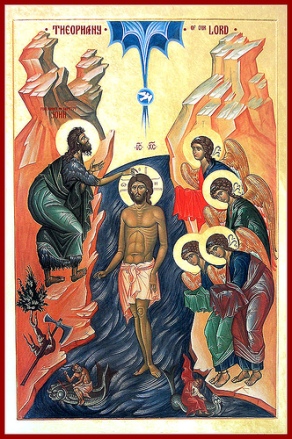 In the name of the Father, and of the Son, and of the Holy Spirit. Amen. Beloved in the Lord, “One Lord, one faith, and one Baptism,” has led us all to the, “… unity of faith and of the knowledge of the Son of God,” as it says in this morning’s epistle proscribed for the Sunday after Theophany, the Feast of Our Lord’s Baptism which we celebrated last Friday. Look around yourself this morning to behold the evidence of this unexpected unity. Because of Our Lord’s Baptism, He sanctifies human nature and makes possible a community of people from so many unexpected places. As St. Paul says in his first epistle to the Corinthians, “Brothers and sisters, think of what you were when you were called. Not many of you were wise by human standards; not many were influential; not many were of noble birth. But God chose the foolish things of the world to shame the wise; God chose the weak things of the world to shame the strong. God chose the lowly things of this world and the despised things—and the things that are not—to nullify the things that are, so that no one may boast before him.” (I Cor. 1:26-29) Which of these despised categories did we once belong before Baptism, separate from one another by the caste system of worldliness, and now look and behold, “How good and pleasant it is for brothers and sisters to dwell together in unity.” (Psalm 133:1)
  Drum roll please… The results are in for the 2017 Best of the Best in all the respective media categories. Please see below and also
  In the name of the Father, and of the Son, and of the Holy Spirit. Amen. Glory to Jesus Christ! Glory forever. What can a young child really do? What is a young boy or girl good for besides growing up into adulthood? Aren’t we adults the ones who run the church and isn’t their place merely to respect and obey instruction until the time comes when they are old enough to run things themselves? While I would agree with at least this assessment of the role of children in the church, I challenge us to see a deeper dimension of these to whom our Lord promised that the Kingdom of Heaven belongs. These same youths that the Apostle Paul enjoined in his letter to Timothy not to despise because of their youthfulness.
 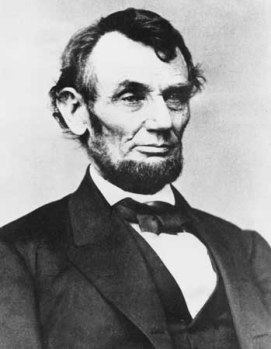 There is a beautiful story about one of the greatest world leaders, Abraham Lincoln. One day an elderly woman made an appointment to see the president. When she entered his office, he welcomed her and asked, “How may I help you?” The woman responded in a quiet voice, “Mr. President, I know that you must be very busy. I didn’t come to ask anything of you. I simply came because I heard that you liked certain cookies, and I decided to bake some for you.” After she gave them to her, she got up to leave. However, she could see that there were tears in the president’s eyes. He smiled at her and said, “Madam, I thank you for your gift. I must tell you that during all the years of my presidency, many people have come into my office asking for favors and even demanding that I help them in various ways. But you are the very first and only person to come into my office and ask for nothing, but instead to bring me a gift of thanksgiving. I thank you, and promise that I will never forget your act of love.”
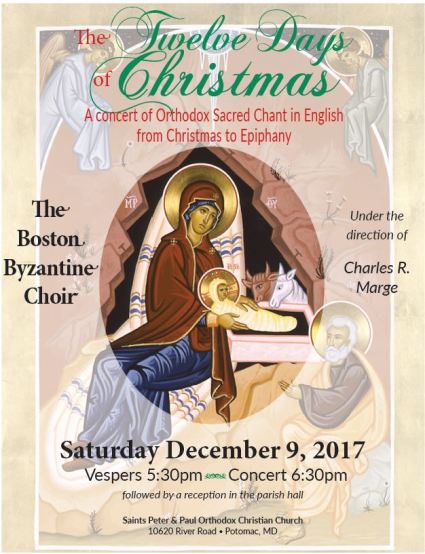 Working up another Boston Byzantine Concert with Charlie Marge. This time, it is local to our nation’s capital in Washington, DC. Though our family is currently living in Syracuse, NY, we are still members of the Boston Byzantine Choir, attending practices
 In this morning’s Epistle and Gospel, we are given two very difficult questions to ponder. What should we do with unanswered prayer and how do we love even our enemies? St. Paul raises the first question in his second letter to the Corinthians when he insists that three times he asked the Lord to remove a thorn in his flesh and after only the third time did he receive his answer. What are we to make of this heavenly reluctance to respond? How many of us have had similar unanswered prayer and have felt almost like giving up asking?
  Like Mendicant Monks...